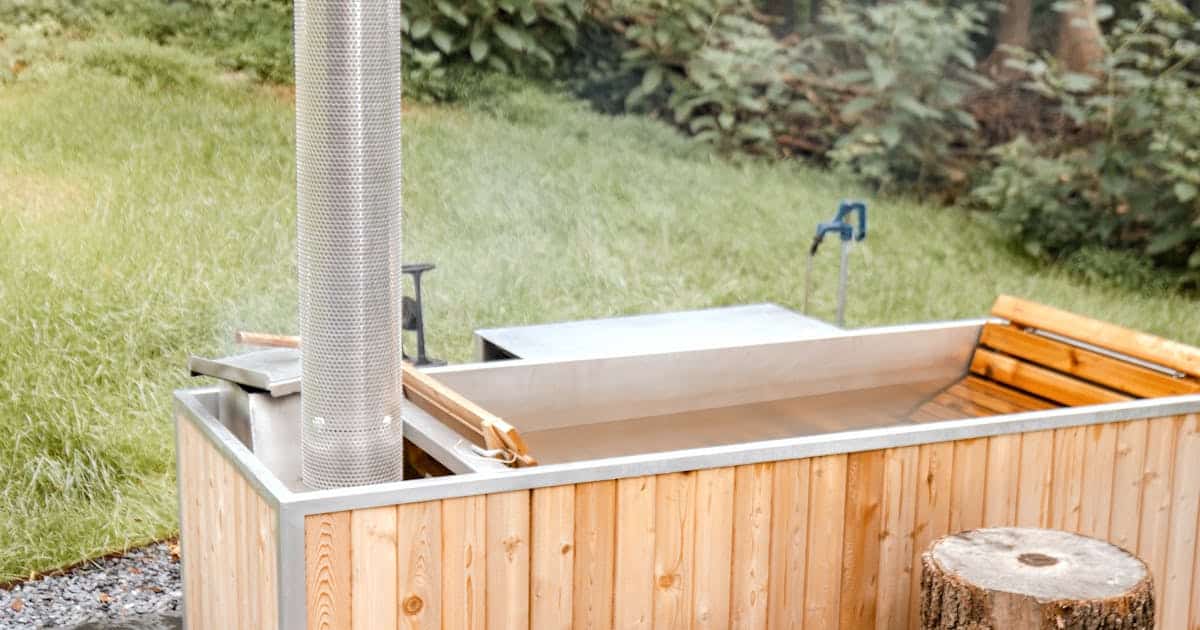

Your hot tub isn’t just equipment. It’s the centerpiece of your backyard. The right landscaping makes it feel intentional, private, and like a real destination instead of a plastic tub on your deck.
Indiana weather is specific. Winters are harsh. Springs flood. Summers are humid. You need landscaping that doesn’t just look good but actually survives. Here are seven practical ideas tested by Indiana homeowners.
1. Privacy Screening Without Solid Walls
A tall wooden fence blocks wind but traps moisture. Hot tubs need air circulation. Better: a living screen.
Plant arborvitae in a double row around your spa. They grow 12 to 15 feet tall, dense enough that neighbors can’t see in, and they air-dry faster than solid wood. Space them six feet apart so water circulates behind them. They tolerate Indiana cold, and they’ll soften the industrial look of the tub itself.
If you want faster results, add a slatted privacy screen in front of the arbs. Six feet of horizontal slats with two-inch gaps let air through while blocking most sightlines. Paint it dark gray or let it weather naturally.
2. Deck Integration That Actually Works
Don’t float your hot tub on a deck like an island. Integrate it. A surrounding deck at the same height as the tub’s rim creates flow. You walk onto the deck. The tub is part of the destination, not a separate thing.
Use composite decking. It holds up better than wood in the humidity and chlorine splash. Leave a gap around the tub for drainage. Slope the deck slightly away from the tub so water flows away from your foundation.
If your Royal Spa has a fiberglass pan, you don’t need a concrete pad underneath. Twelve bags of pea gravel create the perfect base. They won’t erode in rain, they allow drainage, and they’re stable long-term. Level them carefully and check them once a year after heavy rains.
3. Strategic Lighting for Function and Mood
String lights overhead create ambiance without harsh brightness. Run them from your house to a pergola frame over the tub. Solar-powered lights are fine for mood. For actual safety, add one or two landscape lights pointing up at nearby trees or shrubs.
Underwater lighting changes everything. LED lights inside the tub are usually standard or a small upgrade. Use warm white (2700K) for relaxation, not cool white. Your eyes adjust in the darkness. Subtle is better.
Lighting should let you see clearly enough to move safely at night, not turn your backyard into a stadium.
4. Plantings That Don’t Die in Indiana
Don’t plant annuals every spring. Use perennials and shrubs that come back year after year.
Japanese maples grow beautifully in Indiana and don’t mind humidity. Black-eyed Susan and daylilies are practically indestructible. Hostas love shade if your tub sits under tree cover. Ornamental grasses soften the edges and wave in the breeze.
Avoid planting too close to the tub itself. Falling leaves and flowers end up in your filter. Eight feet back is about right. Close enough to frame the space, far enough to keep debris minimal.
5. Pathways That Guide Movement
If your hot tub is more than a few steps from the house, add a clear path. Use pavers, gravel, or stepping stones. It doesn’t need to be elaborate.
Gravel is cheap and natural. Two inches of pea gravel on landscape fabric holds up through Indiana winters and looks clean. Rake it once a year. Pavers last longer if you care about durability.
A good pathway does two things: it keeps people from trampling your landscaping, and it creates a ritual. Walking the path to the tub becomes part of the experience.
6. Drainage That Handles Indiana Rain
Your hot tub holds 300 to 1,000 gallons depending on size. When you drain it seasonally or for maintenance, that water has to go somewhere. When it rains, water pools around the base.
Slope your ground away from the tub. Six inches of drop over ten feet is plenty. If you’re on clay soil, install a simple French drain: a trench with landscape fabric and perforated pipe that guides water away from your tub pad.
During spring thaw in Indiana, water finds its way. A few pavers set at a slight angle direct runoff. Small effort, huge difference in longevity.
7. A Shelter Structure for Year-Round Use
A pergola or gazebo overhead isn’t just decoration. It lets you use the tub in rain and light snow. Full walls trap moisture and defeat the purpose. An open pergola with a roof and slats gives you shelter without creating a sauna.
Wood or metal both work. Space your slats 12 inches apart so rain drains through. Orient it north-south so the sun hits it during the coldest months, heating the space naturally.
Optional: run electrical to the structure for string lights and maybe a ceiling fan for summer circulation.
The Finishing Touch: Seating and Tables
You won’t stand in the tub all night. Add two to three comfortable chairs on the deck, outside the splash zone. A small side table holds drinks, towels, and phone.
Keep furniture simple and weatherproof. Teak, aluminum, or high-density polyethylene all stand up to Indiana weather. Avoid upholstered chairs unless you’re willing to bring them inside seasonally.
Why Landscaping Matters
Your hot tub is an investment in daily wellness. You get the most from it when the space around it feels intentional and inviting. Landscaping isn’t decoration. It’s the difference between a backyard utility and a destination you actually want to spend time in.
Indiana weather is particular. Your landscaping needs to be, too. These ideas work because they’re proven locally. Screens that dry fast. Plants that come back. Drainage that handles thaw. Pathways that guide flow.
Spend as much on the space as you do on the equipment. Both matter.
Come by the showroom. We’ll talk about sizing your tub for your space and show you pictures of how other Indiana homeowners have landscaped around theirs. The design is yours. The engineering is ours.